Mictlantecuhtli @ Awingna
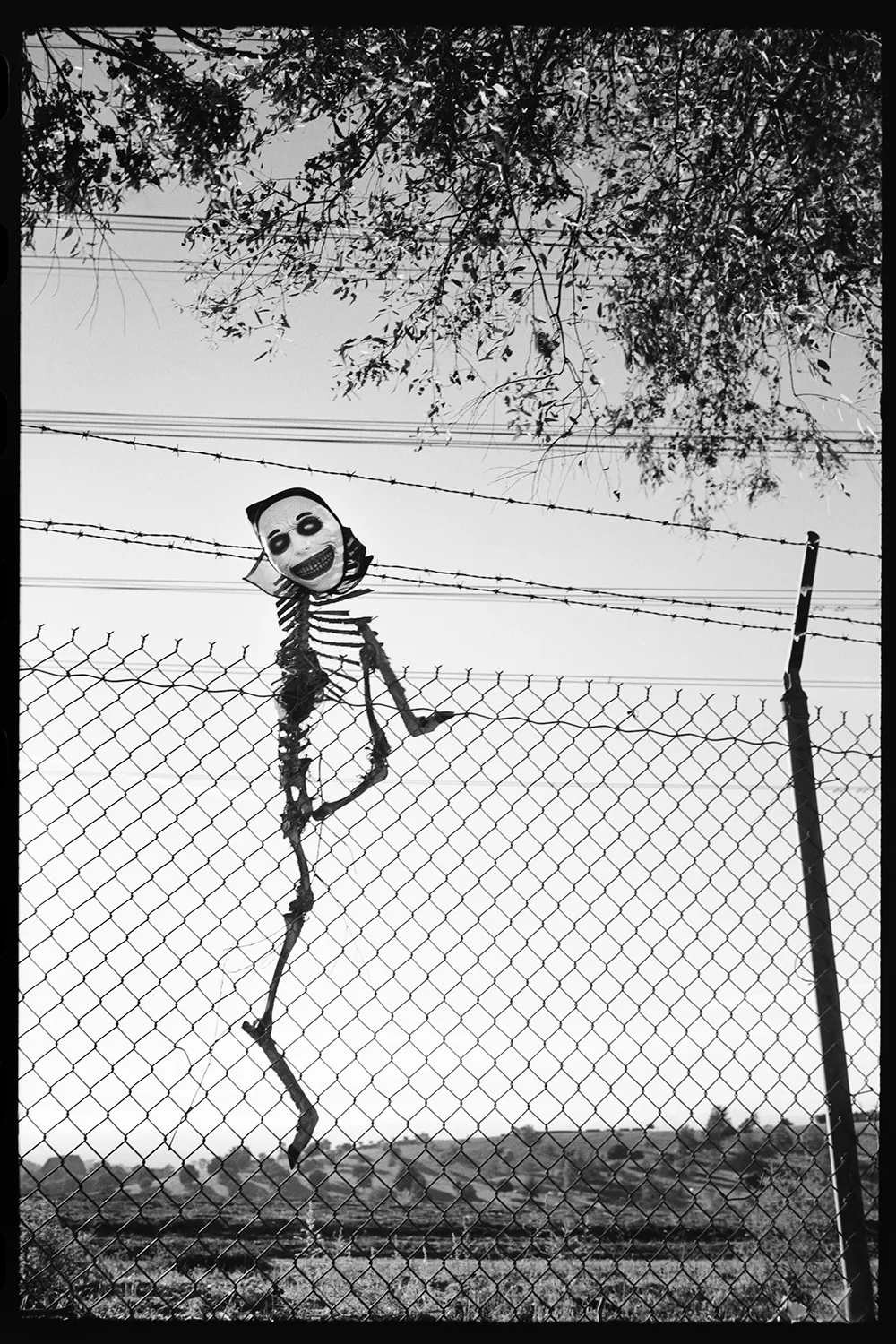
I named this image Mictlantecuhtli @ Awingna because the masked skeleton reminded me of some Mesoamerican sculptures of the god of the dead, Mictlantecuhtli, The Lord of Mictlan (Underworld), and I took it near Ahwingna Trail on the historic Kizh - Gabrieleño ancestral land.
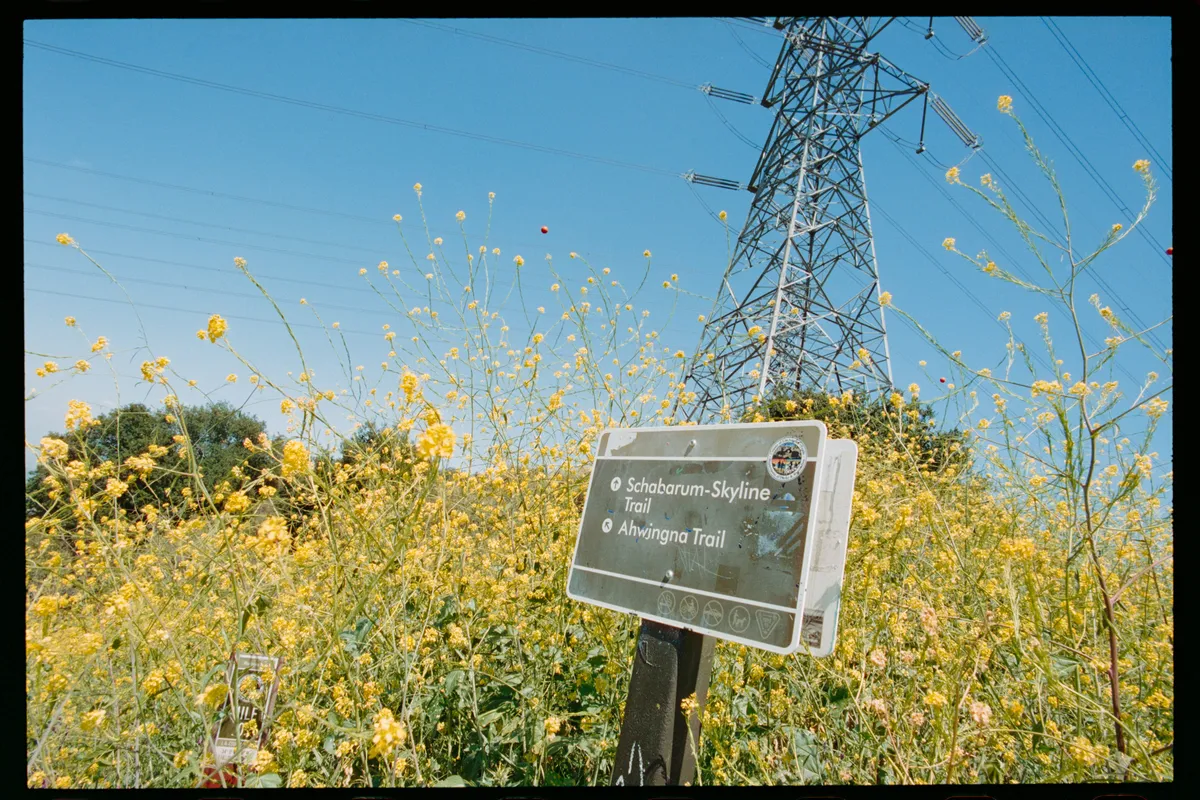 Ahwingna Trail Spring 2025
Awingna/Awiingna/Awigna (phonetic spellings) was the name of the Kizh - Gabrieleño settlement, contemporarily referred to as La Puente, California. While the Kizh - Gabrieleño and Mexica cultures were not in direct contact, both have Uto-Nahuatl based languages. This made me think about how the history, connection, and diversity between different Indigenous cultures has been distorted through colonialism(s) and colliding empires.
I included an @ in the title because I don’t know any more Nahuatl words, and it feels like such a ubiquitous symbol in this digital age. The image reminded me of this Mictlantecuhtli sculpture found in a ceremonial landfill from the Central Veracruz culture that was made during the Late Classic Period, 600-900 CE.
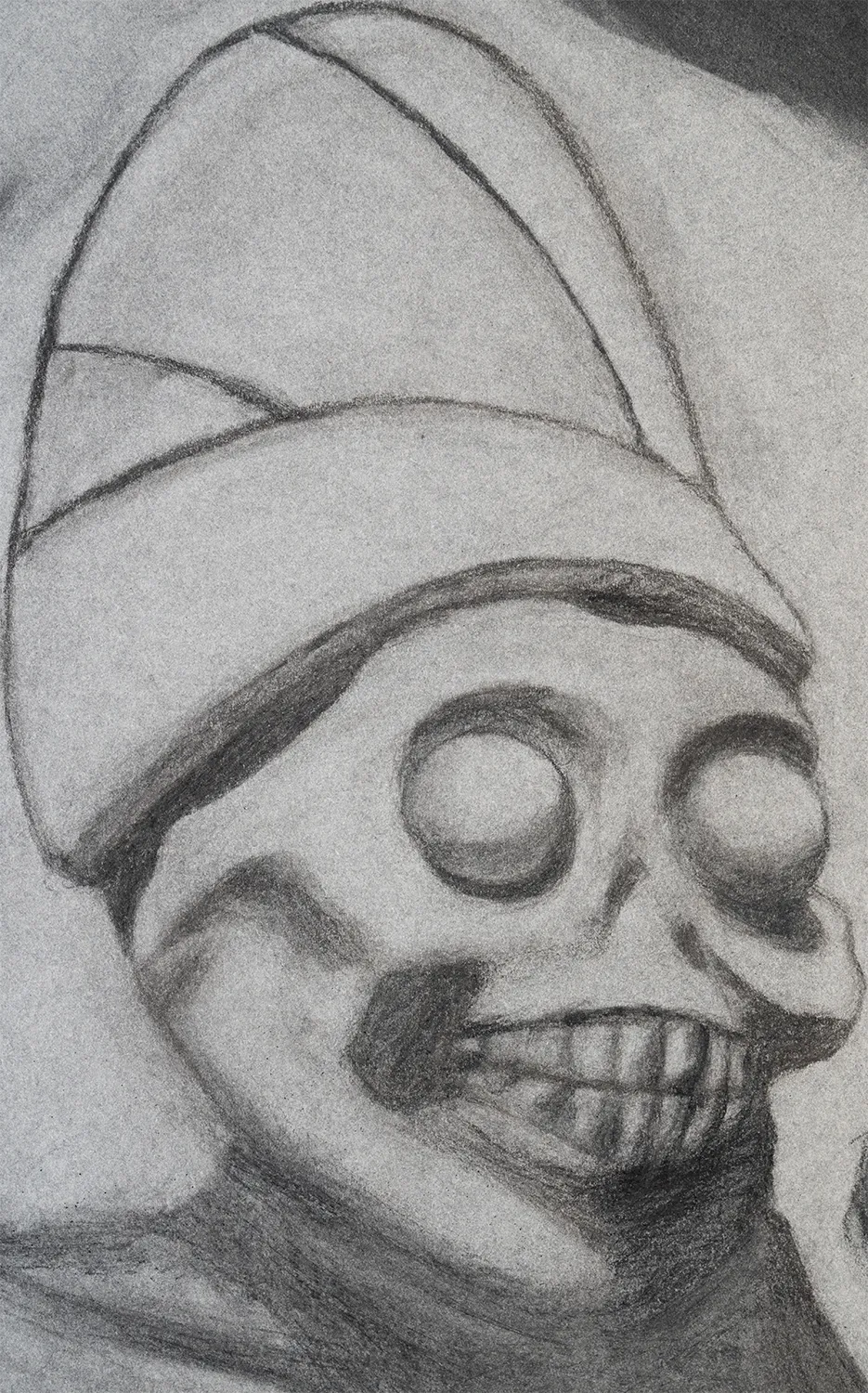 Mictlantecuhtli | mikey’s charcoal drawing work-in-progress
It also reminded me of this Mictlantecuhtli sculpture from the Templo Mayor at Tenochtitlan, c. 1400-1521 CE. What some have described as a liver hanging from the sculpture’s stomach, reminds me of a blooming flower.
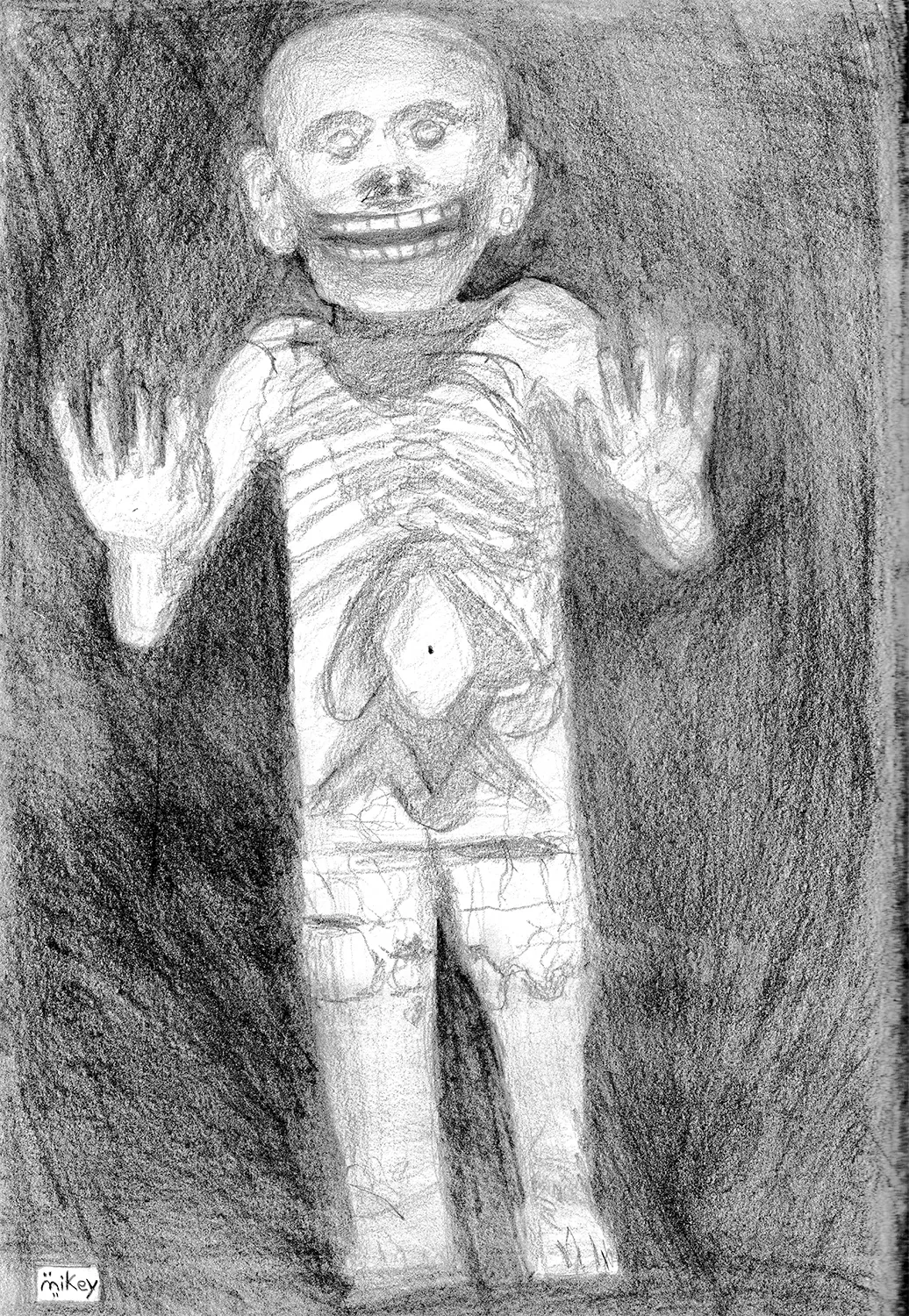 Mictlantecuhtli Templo Mayor | mikey’s graphite sketchbook study
Coincidentally, Mictlantecuhtli @ Awingna was taken at the closed Puente Hills Landfill (now operating as a landfill gas-to-energy facility) with the Rose Hills Memorial Park & Mortuaries directly behind.
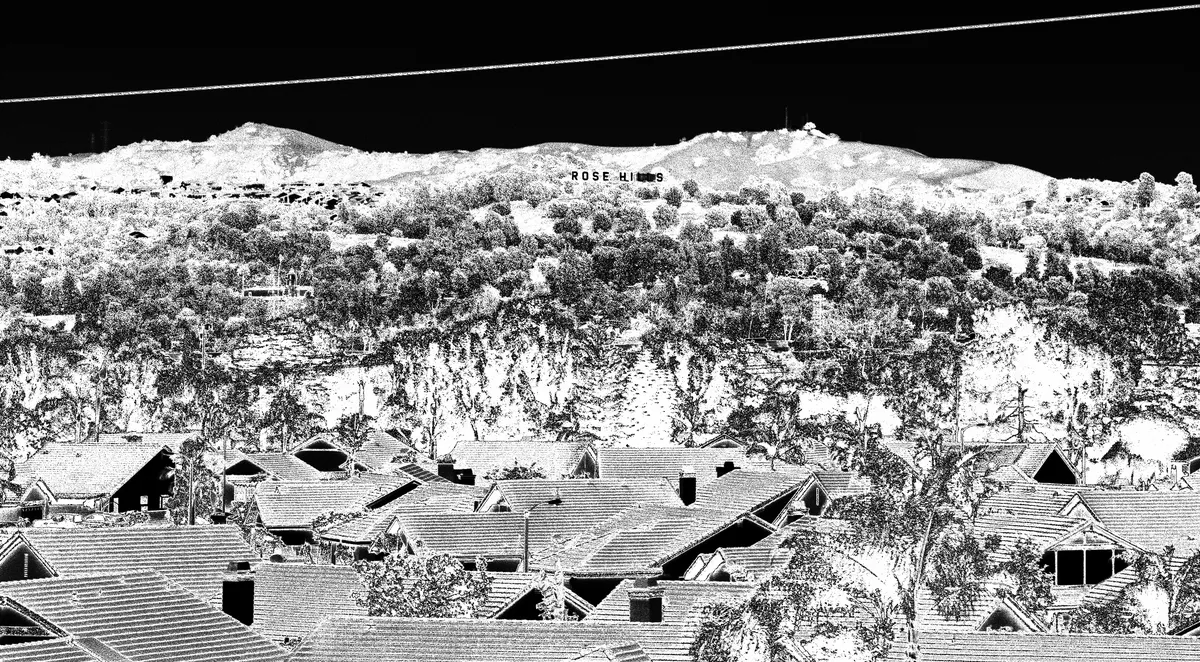 ROSE HI[GH]S | tree climbing old heights | 08/15/2022
Seeing the skeleton caught on the fence made me think of the ways in which borders and border deterrence policies kill people, wildlife, and ecosystems while fracturing Indigenous Nations, such as the Yaqui, the Lipan Apache, the Tohono O’odham, and more, predating the Mexica Triple Alliance, Mexico, and the United States.
Borders, human constructed barriers, transform what are often already arid desert landscapes into hellscapes. Since the implementation of Prevention Through Deterrence (PTD) in 1994, human rights groups have estimated that upwards of eighty thousand deaths have occurred as a result of the policy (Human Rights Watch). The Human Rights Watch notes that the policy “explicitly sought to deter irregular border crossing by ‘disrupt[ing]...traditional entry and smuggling routes’ so migrants would be ‘forced over’ more ‘hostile terrain’ far away from populated areas where those at risk of death by exposure to harsh elements might be able to seek help” (Cost of Harsh US Immigration Deterrence Policies).
From barbed wire fences to towering walls, to river buoys with saw blades, hundreds of billions of dollars in taxpayer money and countless resources to support the erroneous PTD logics of border security. These policies have created a humanitarian crisis at the border through the racist criminalization of migration, dangerous infrastructure, and a militarized border patrol whose security and surveillance logics contradict, prevent, and criminalize humanitarian aid.
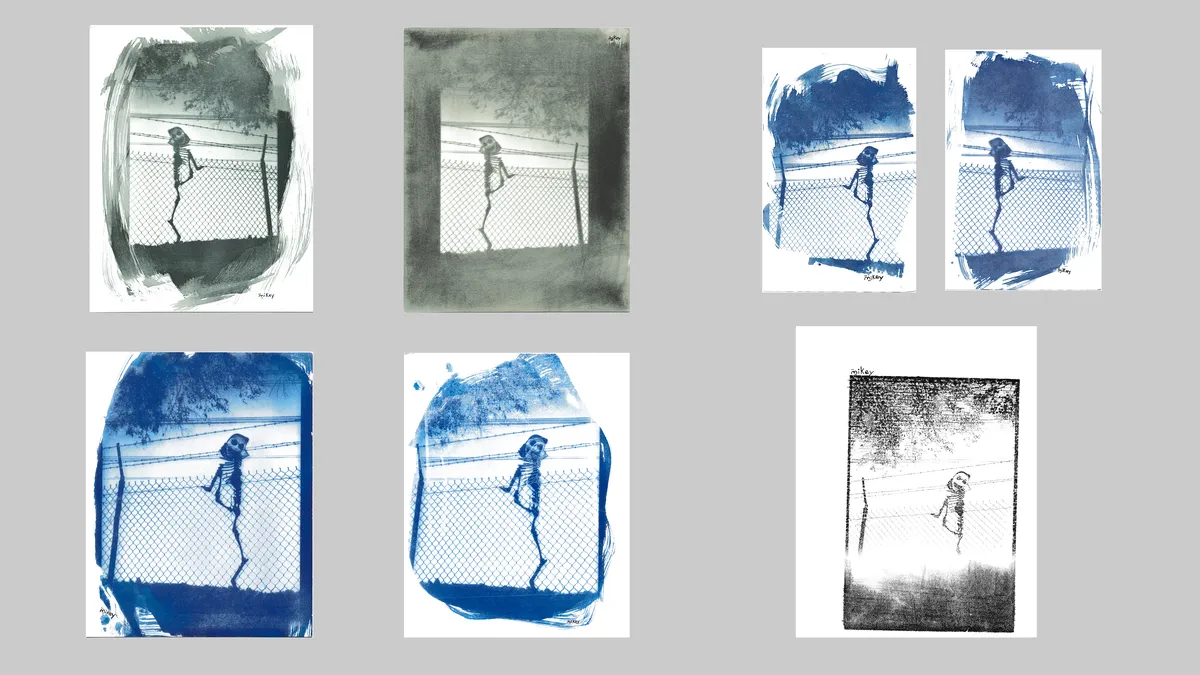 2, 8×10” cyanotypes bleached (sodium carbonate) & toned (coffee)
2, 8×10” cyanotypes
2, 8.5x5.5” cyanotypes
1, 8.5×11” solvent ink transfer print
2, 8×10” cyanotypes bleached (sodium carbonate) & toned (coffee)
2, 8×10” cyanotypes
2, 8.5x5.5” cyanotypes
1, 8.5×11” solvent ink transfer print
I first saw the deer skeleton on this fence in the summer of 2024. In fall of 2024, I was taking an alternative process print course at Santa Monica College (SMC), so I eventually decided to try and get out of my comfort zone to go photograph the skeleton even though I found it to be a morbid subject. I went during Dia de los Muertos in 2024, and, lo and behold, someone had put a mask on the skeleton. I had seen the skeleton multiple times before I finally decided to photograph it, so seeing it with the mask gave me an eerie feeling but made me feel reassured about finally taking my camera to photograph it.
I scanned and edited the film, but I didn’t end up making a digital negative to print it until it was selected for the Spring 2025 SMC Student Photography Exhibition after I reluctantly submitted it.
With the help of SMC’s Photography department, I made two giclée prints on Platine paper of Mictlantecuhtli @ Awingna, one of which was featured in the exhibition. With the help of M-Vision Graphics, I made digital negatives that I used to make these cyanotypes and this solvent ink transfer print from the first two failed negative attempts. In addition, M-Vision helped me create two solvent ink prints.
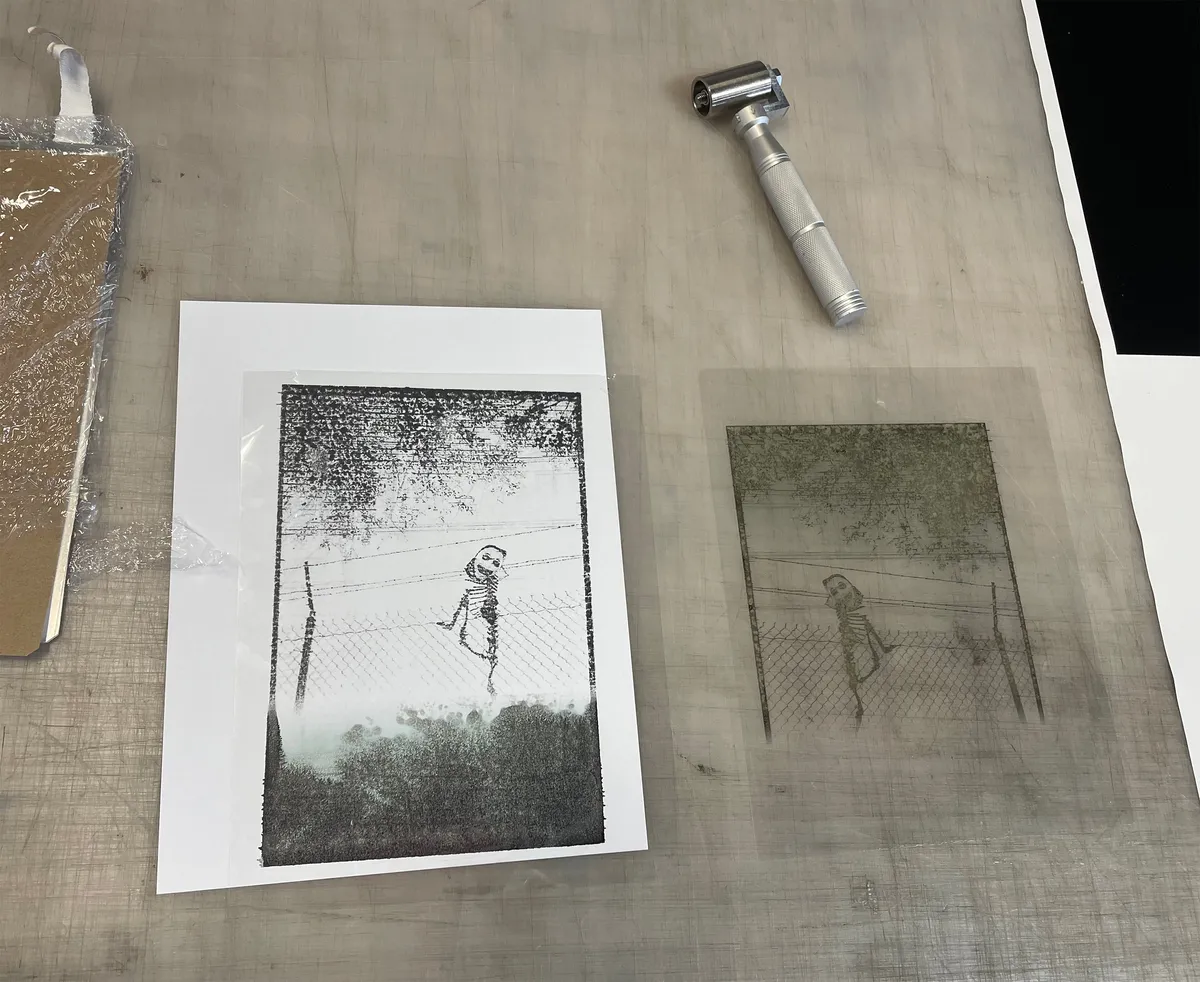 prints available | inquire: mikey@mykeymikeystudios.com